How It Works
An Overview of the League
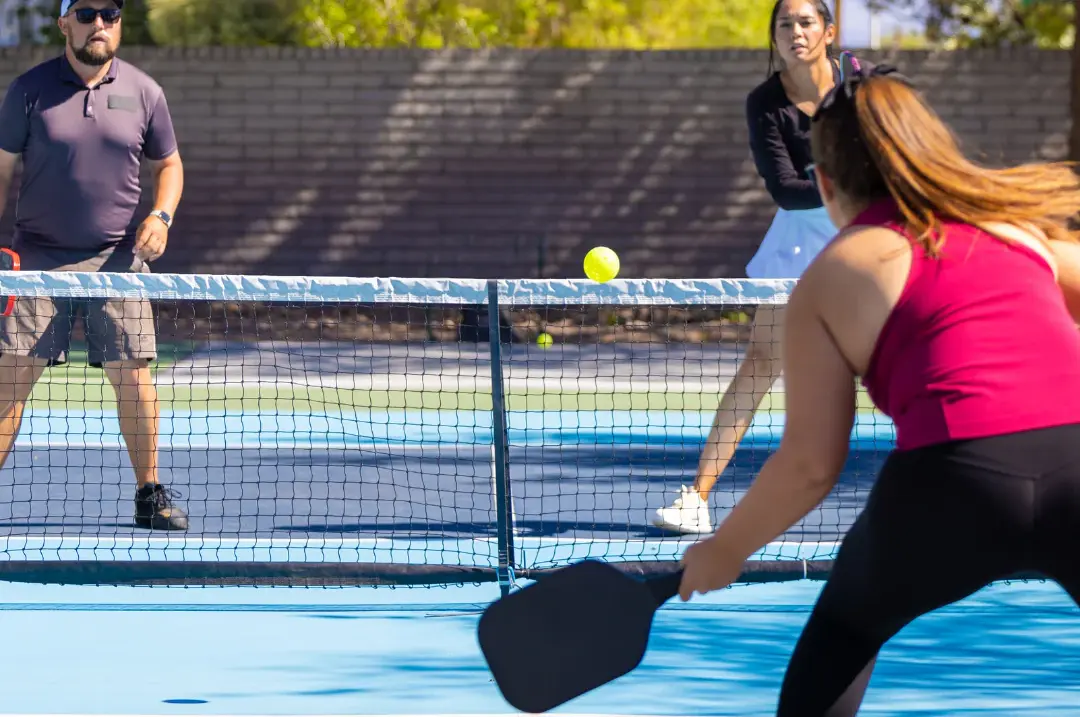
716 Dink League is a laid-back, self-coordinating doubles pickleball league. Sign up with a partner or solo, and we’ll pair you with one.
Each Monday, you’ll get your matchup for the week along with a personal link to share your availability. From there, the league does the legwork: it finds the times that work for both teams and suggests a court when your preferences line up. You play, then reporting the score takes a single tap, with your opponent confirming in one click.
Standings update live throughout the season, building toward an 8-team playoff bracket to crown a champion.
How to Play Pickleball
New to the game? Here’s everything you need to step on the court with confidence.
The basics
Pickleball is played on a court about a quarter the size of a tennis court, with a paddle and a perforated plastic ball. Doubles (two players per side) is the most common format. Games are fast, social, and easy to pick up.
Serving
The serve is made underhand, with the ball struck below your waist. Serve diagonally cross-court from behind the baseline into the opposite service box. You get one serve attempt per turn.
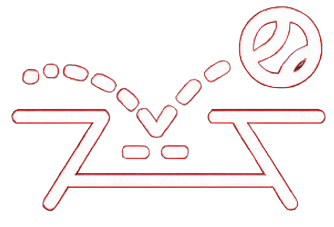
The two-bounce rule
After the serve, the ball must bounce once on each side before anyone can hit it out of the air. So: the serve bounces, the return bounces, and only then can players start volleying. This keeps the serving team from rushing the net early.
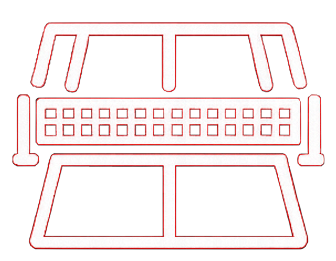
The kitchen (non-volley zone)
The 7-foot zone on each side of the net is the “kitchen.” You can’t hit the ball out of the air while standing in it or touching its line. You may step in to play a ball that has already bounced — just be out of the kitchen before you volley again.

Scoring
Games are played to 11, and you must win by 2. Only the serving team can score points. In doubles, both partners serve before the serve passes to the other team. The score is called as three numbers: your team’s score, the other team’s score, and which server you are (1 or 2).
Common faults
You lose the rally if you: hit the ball out of bounds, hit it into the net, volley while in the kitchen, or break the two-bounce rule. The serve also faults if it lands in the kitchen or outside the correct box.